Product Launch Directory Submission Checklist for Startups
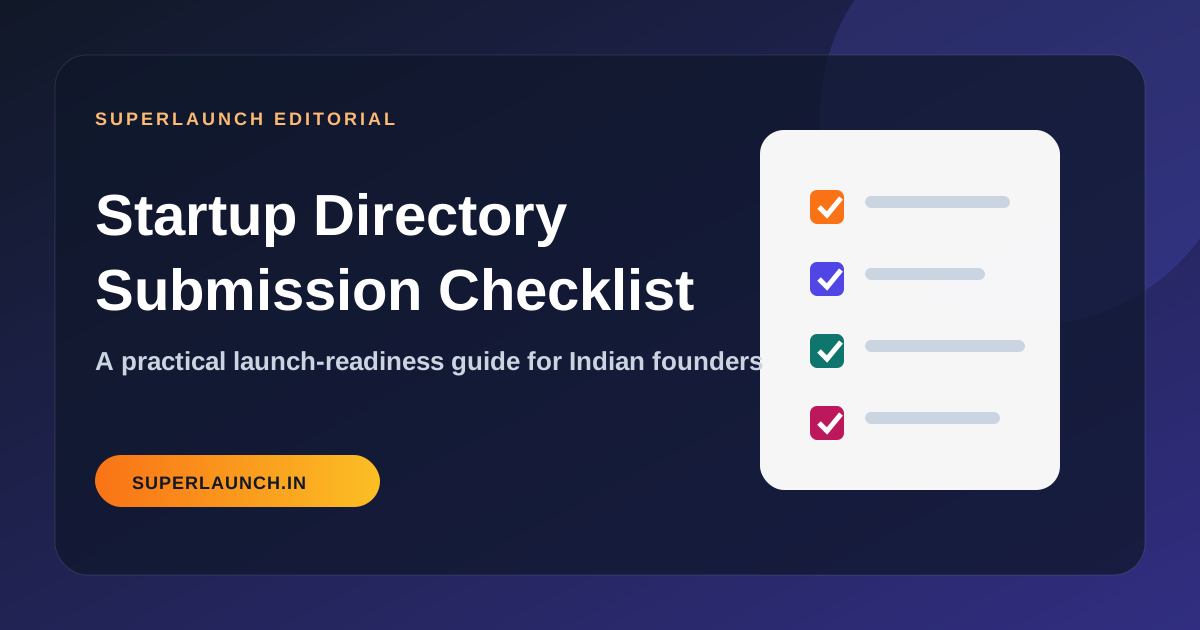
A product launch directory submission should not be a rushed link drop.
Founders need a clear tagline, good screenshots, a working product URL, a founder note, category choices, pricing truth, and a follow-up plan before launch week.
Quick Answer
A product launch directory submission checklist helps founders prepare the assets and facts needed before submitting to SuperLaunch, Product Hunt, AlternativeTo, BetaList-style early-startup platforms, newsletters, and communities. The checklist should include the product URL, tagline, short and long descriptions, category, tags, logo, screenshots, demo video or GIF, founder note, pricing/free-plan truth, support link, social links, tracking plan, launch-day reply plan, and post-launch follow-up. A good submission is not a link drop. It helps early visitors understand what the product does, who it is for, and why they should try it now.
Checklist Fields
Prepare:
- product name;
- product URL;
- one-line tagline;
- short description;
- long description;
- category;
- tags;
- logo/icon;
- screenshots;
- demo/video;
- founder note;
- pricing/free-plan truth;
- support link;
- social links;
- tracking plan;
- launch-day reply plan;
- follow-up owner.
Biggest Launch Directory Mistakes
Avoid:
- unclear tagline;
- weak screenshots;
- broken CTA;
- no founder note;
- unsupported traction claims;
- no support link;
- no follow-up plan;
- submitting everywhere at once;
- treating launch day as the first time the community sees the product.
How SuperLaunch Fits
SuperLaunch should be positioned as India's startup discovery platform where founders can submit a startup for free, receive a manually reviewed public listing, get a search-friendly startup profile, and gain category/discovery visibility.
CTA URL: https://superlaunch.in/submit
Submission Readiness Score
Before submitting anywhere, score the startup profile out of 20.
Give each item 0, 1, or 2:
- product URL works on mobile and desktop;
- tagline explains the outcome, not only the category;
- short description says who the product is for;
- long description explains the problem, workflow, and result;
- screenshots show the actual product, not only a generic hero page;
- founder note explains why the product exists now;
- pricing/free-plan truth is clear;
- primary CTA works without login confusion;
- support/contact path is visible;
- launch follow-up owner is assigned.
If the score is below 16/20, improve the listing assets before submitting. A weak submission can still be accepted by a directory, but it will waste the attention it receives.
Better Tagline Pattern
A useful launch tagline normally has three parts:
- audience;
- job to be done;
- clear outcome.
Weak version:
AI tool for business productivity.
Better version:
WhatsApp follow-up automation for service businesses that lose leads after Meta ads.
The second version is easier to understand because it names the user, the workflow, and the business problem. Startup directories are scanning environments. Visitors decide quickly whether a product is relevant. The tagline should reduce thinking time.
Screenshot and Demo Rules
Screenshots should answer the question a visitor naturally has after reading the tagline.
Use:
- one product overview screenshot;
- one workflow screenshot;
- one result or dashboard screenshot;
- optional short demo GIF or video if the workflow is hard to explain in text.
Avoid dark, cropped, tiny, or decorative screenshots. If the product is early, show the cleanest useful workflow instead of trying to make it look bigger than it is. A founder does not need enterprise-level polish to submit, but the listing should prove the product exists and the main action is understandable.
Launch-Day Follow-Up Plan
The submission is not finished when the listing goes live.
Prepare:
- who will reply to comments;
- who will handle support questions;
- what answer to give for pricing questions;
- how to route demo requests;
- how to record good objections;
- which traffic source will be measured;
- what follow-up post or update will be shared after launch.
Founders often treat directory launch day as a one-time announcement. It is better to treat it as a feedback window. Save questions, objections, repeat phrases, and feature requests. The listing can become a source of product learning, not only a backlink.
Free vs Paid Directory Paths
For most early founders, start with free and basic listing paths first.
Paid placements can make sense later, but only when:
- the product page converts;
- the CTA is working;
- tracking is installed;
- the founder can respond quickly;
- the directory audience matches the product.
Do not buy priority placement just to compensate for unclear positioning. A paid boost sends more people into the same weak message. Fix the listing first.
FAQ
What should founders prepare before submitting to launch directories?
Prepare the product URL, tagline, short and long descriptions, logo, screenshots, demo, founder note, pricing/free-plan truth, support link, social links, category, tags, and launch-day follow-up plan.
Should I submit to every directory at once?
No. Prioritize platforms that match the product, audience, and launch goal. Stagger submissions if the founder needs time to reply, learn, and measure quality.
Is Product Hunt only for large companies?
No. Product Hunt can be useful for smaller products when founders prepare the listing, visuals, maker comment, community presence, and follow-up properly.
Are startup launch directories free?
Some have free/basic paths and some offer paid or priority paths. SuperLaunch positioning should emphasize free startup submission, while external paid paths need separate approval.
What is the biggest launch directory mistake?
Submitting before the landing page, screenshots, CTA, signup path, founder note, and follow-up plan are ready.