An app-store listing can help identify who distributes an Indian startup's mobile app, but it is not complete proof of the startup's legal identity or ownership history. Record the exact app URL and technical identifier, capture the displayed developer and seller fields, follow the official website and privacy links, and then bridge those facts to the startup's legal entity using first-party and registry evidence. If the names do not reconcile, leave the relationship unresolved.
This workflow is for founders, researchers, investors, procurement teams and editors who need a reproducible app-identity record. It does not establish source-code ownership, trademark rights, security, regulatory approval, current operations, product quality or investment safety.
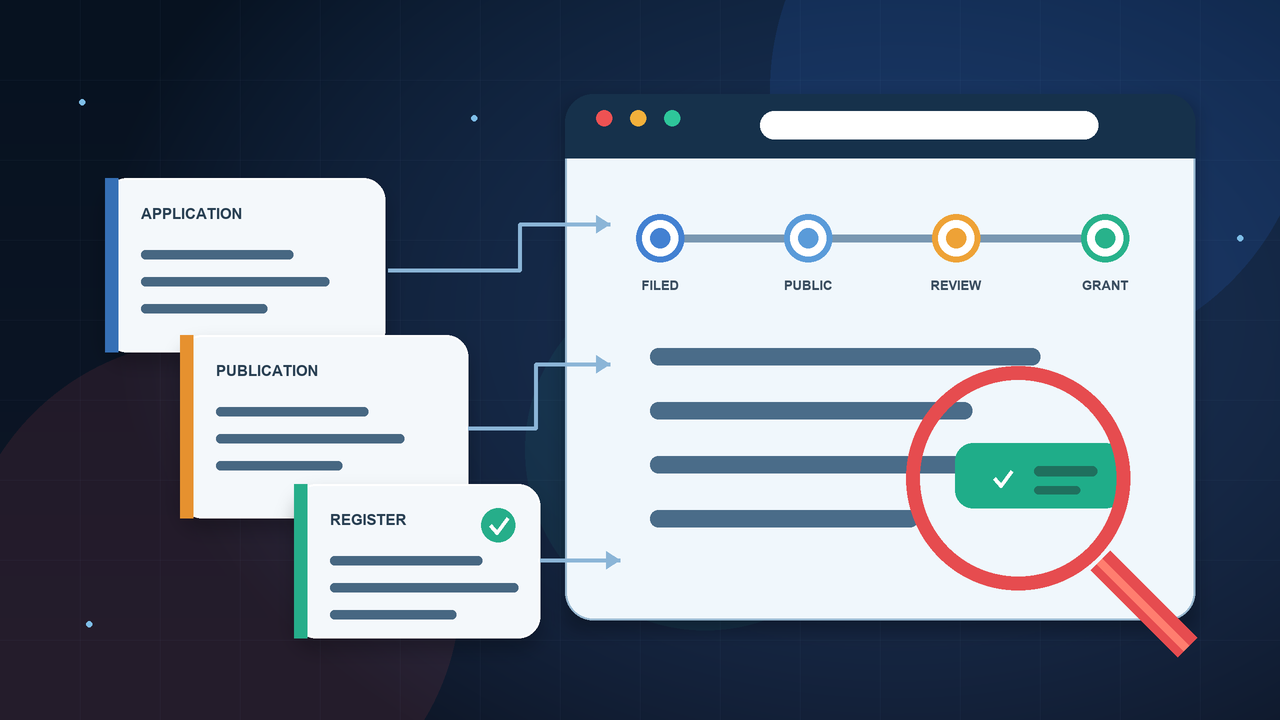
What an app-store listing can establish
Google Play and Apple's App Store publish useful identity fields, but the labels and account rules differ. Treat every field as a separate evidence layer.
| Evidence layer | What to record | What it does not prove by itself |
|---|---|---|
| App record | Store URL, app name, package name or Bundle ID, platform and country storefront | That two similarly named apps belong to the same company |
| Displayed developer name | The public developer label and the time checked | The exact incorporated entity in every case |
| Seller or verified legal details | The legal or seller name shown by the store, where visible | Ownership of the startup brand, source code or trademarks |
| Website and privacy links | Destination URL, redirect target, domain and legal name on the page | That every claim on the website is independently verified |
| Version history | Current version, release notes and displayed update date | Continuous support, current security or active business operations |
The safest public sentence names the store and the field: “Google Play listed [name] as the developer when checked on [date].” A stronger sentence connecting the app to a company needs a documented bridge.
Read Google Play identity in layers
Google's current developer identity verification guidance says verified developer information is shown on Google Play. It distinguishes personal and organisation accounts, and says organisation verification can require a D-U-N-S number, an official identity document and an organisation document. It also separates public developer contact details from private contact details Google uses to reach the account owner.
That verification makes the displayed fields useful evidence about the Play developer account. It does not mean Google has audited the startup's funding, products, corporate filings or relationship with every brand shown in an app.
Developer name and legal identity are not one field
Google's Play Console account requirements say the developer name shown on Google Play can be changed, while an organisation's name and address come from the linked payments profile and must be verified before publication. For a personal account, the public identity can be an individual's legal name rather than a company.
Record the displayed developer name exactly. Then inspect the store's developer-information section for the legal name, country, address or contact details actually visible for that account type and app. Do not silently rewrite an individual account into a private limited company, or a brand label into the legal entity you expected to find.
A verified website is a supporting bridge
Google's website-verification process creates an association between the Play Console developer account and a website property in Google Search Console. This is stronger than an arbitrary clickable URL because the site's registered owner approves the association.
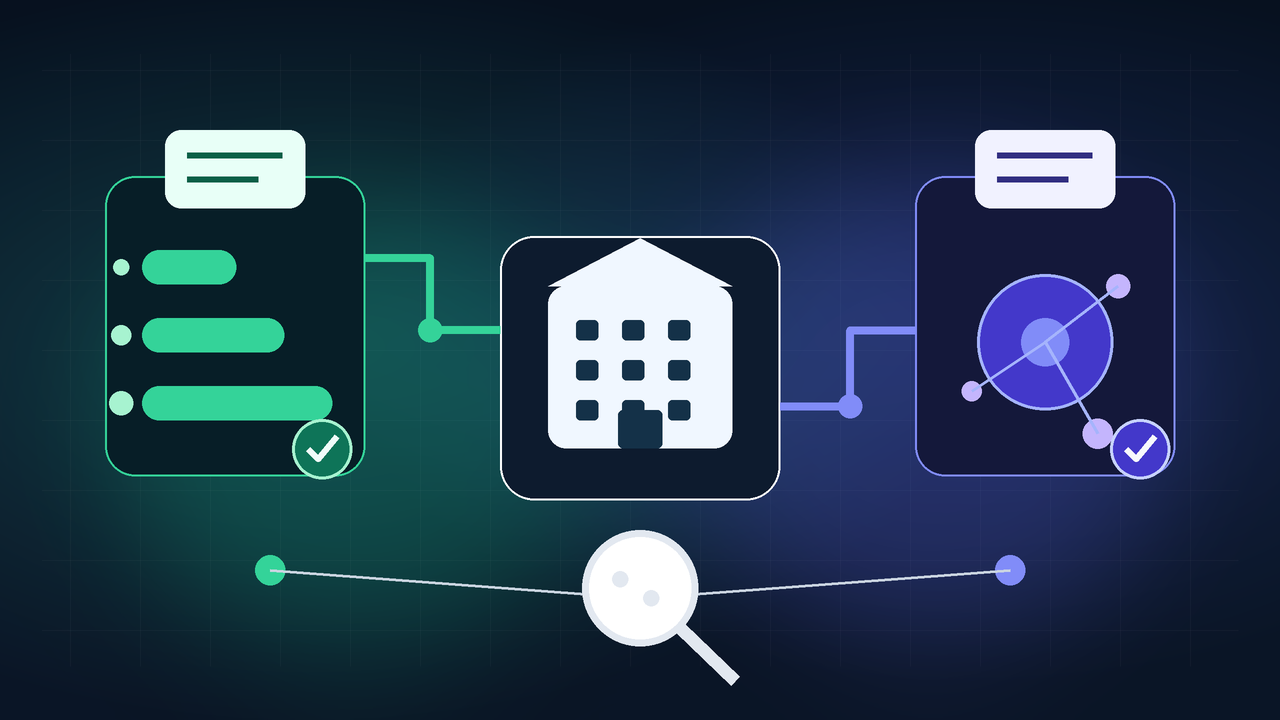
Still, website control is one layer. Follow the link, note redirects, and look for a consistent entity name in the privacy notice, terms, contact page or app-support page. Then reconcile that name with the relevant official company record. The broader source-first Indian startup verification workflow explains how to connect a public brand to a legal entity without treating one link as universal proof.
Separate Apple's developer name from seller identity
Apple's terminology needs its own column. Its current programme-enrolment guidance says an individual's personal legal name is listed as the seller. For an organisation account, the legal entity name is listed as the seller, and Apple requires legal-entity status plus identity checks that include a D-U-N-S number in ordinary organisation enrolment.
Apple separately explains that the developer name shown under an app defaults to the legal name. An organisation may choose a registered trade name, DBA or fictitious business name when adding its first app, while an individual cannot choose a different developer name. Apple says that developer name is set only with the first app and cannot later be edited through that flow.
For research, capture both labels when available:
- developer name displayed under the app;
- seller name in the information section;
- app URL and numeric App Store ID;
- Bundle ID only when obtained from an authoritative technical or first-party source;
- linked developer website, privacy policy and support URL;
- storefront country and check time.
If a trade name and seller name differ, that can be expected for an organisation. Document the difference instead of choosing one label and discarding the other.
Account transfers change the identity context
An app can move between developer accounts. Google publishes an official Play app-transfer process and says users, download statistics, ratings, reviews, content ratings and store-listing information transfer to the target account. Apple likewise says in its app-transfer overview that an app can move to another App Store Connect account or organisation while remaining available; reviews and ratings remain, users continue receiving updates, and the Bundle ID is retained.
This means a long review history is not proof that the currently displayed seller operated the app for its entire lifetime. It also means an unchanged app identifier can coexist with a changed account holder.
When a founder claims acquisition, historical ownership or continuity, seek a dated first-party announcement, transaction disclosure where appropriate, archived store evidence, and the current store record. If you can prove only the present account, publish only the present account.
A seven-step app identity check
1. Freeze the exact app record
Copy the canonical Google Play or App Store URL. Record the app name, platform, country storefront and package name or numeric App Store ID. Do not search only by icon or title; both can resemble unrelated apps.
2. Capture public account fields
Record the developer name, seller or legal-name field where shown, public contact details, website, privacy policy, current version and displayed update date. Add a checked-at timestamp and preserve a minimal screenshot or note if your research policy allows it.
3. Follow every first-party bridge
Open the developer website, support page and privacy policy. Record redirect destinations and whether the final pages use the same domain. Look for the legal entity responsible for the app, not merely the marketing brand in the header.
4. Reconcile the company identity
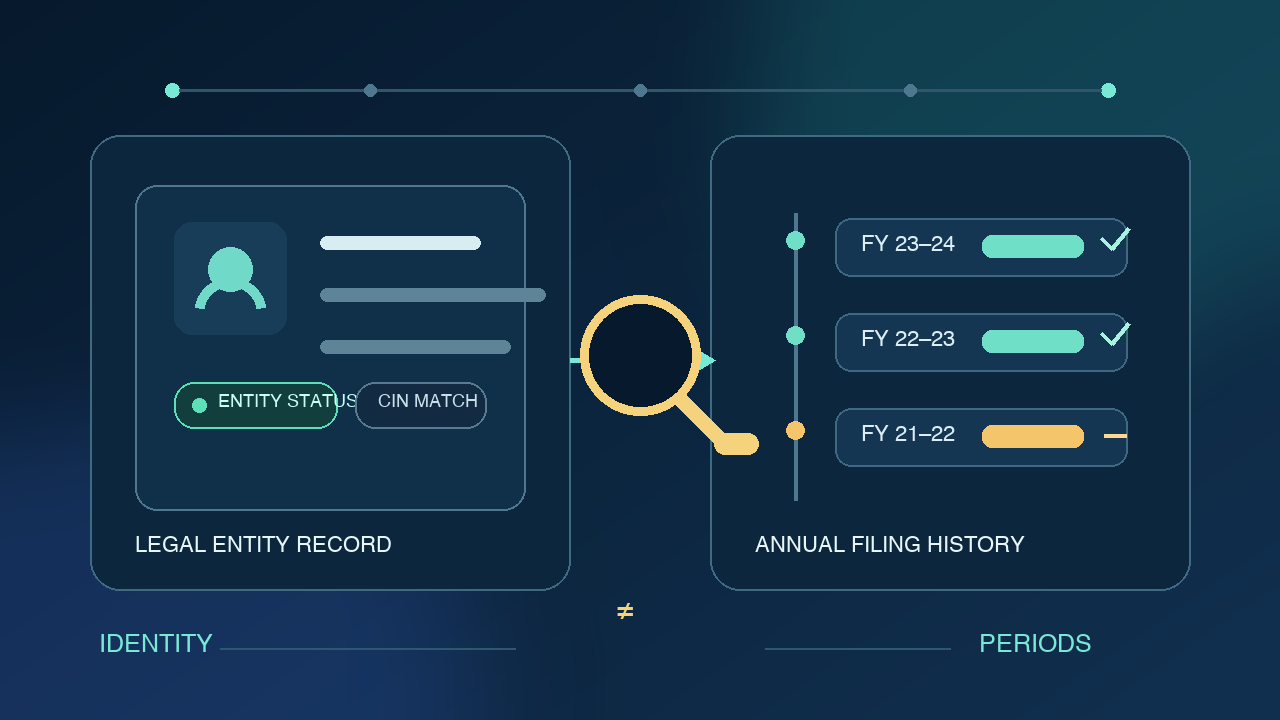
Match the first-party legal name to the appropriate official record. For an Indian company, preserve the exact legal name and CIN rather than guessing from a brand. The MCA identity and filing guide explains why company status and filing history remain separate checks.
5. Compare platforms without forcing a match
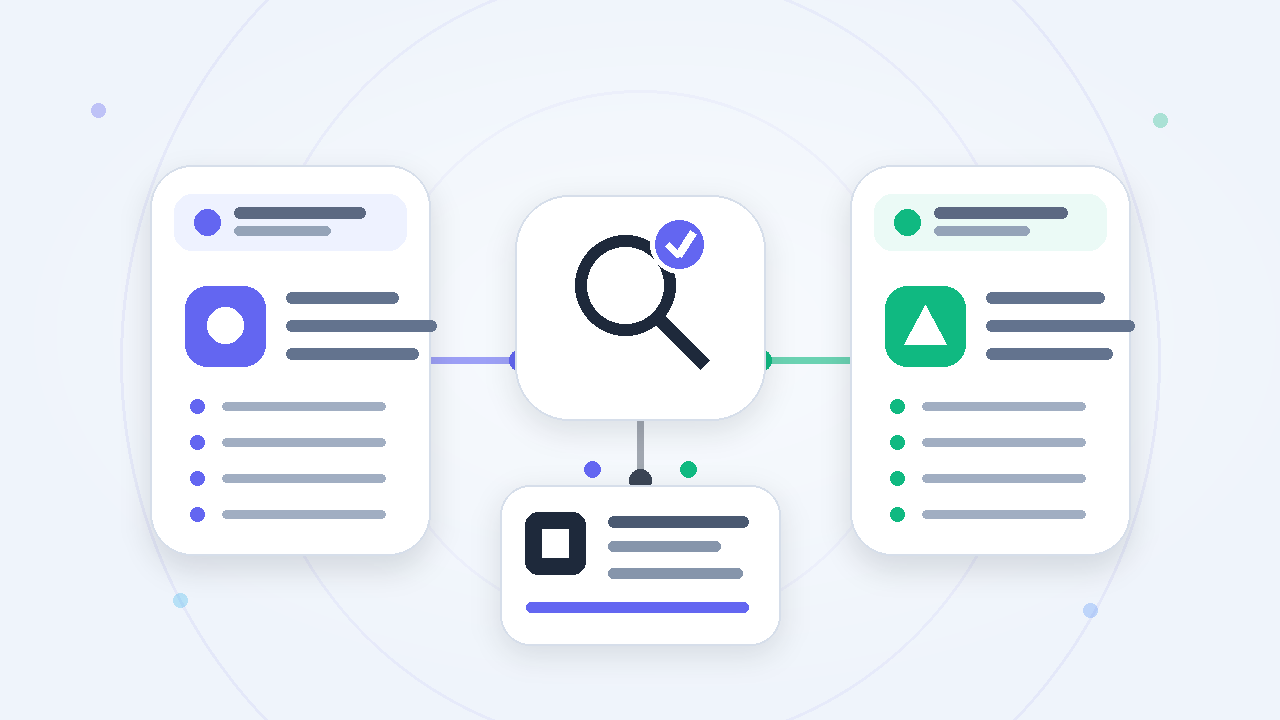
If the product exists on Android and iOS, compare names, websites, privacy URLs and support contacts. Different account structures may be legitimate. Record the difference and seek an explicit first-party bridge; do not assume matching icons establish common ownership.
6. Check for transfer evidence
Search the startup's own newsroom, acquisition announcements or support notices for a dated transfer. Store history can survive an account transfer, so avoid attributing all historical ratings, releases or users to the current seller without evidence.
7. Publish the weakest fully supported claim
Use “listed by,” “displayed as seller,” “linked to” and “checked on” precisely. Reserve “owned by,” “developed by” or “acquired by” for evidence that supports those relationships.
Keep a reproducible evidence row
For one app, retain these fields:
| Field | Example format |
|---|---|
| App identity | Platform, store URL, package name or store ID |
| Public account | Developer name; seller or legal name if shown |
| First-party bridge | Website, privacy and support URLs with final domains |
| Entity bridge | Exact legal name and official-record identifier |
| Time boundary | Checked date, time, timezone and storefront |
| Transfer evidence | Present, absent or unresolved; dated source if present |
| Bounded conclusion | Exact sentence approved for publication |
| Exclusions | Ownership history, security, performance and other untested claims |
For a multi-app dataset, keep one row per platform record and preserve your collection rules using the reproducible startup dataset audit. Do not merge Android and iOS rows until their identity bridge is explicit.
Stop when the names or history conflict
Hold or narrow the claim when:
- the store URL is missing and only an app title or icon is supplied;
- package name, App Store ID or platform differs across sources;
- the developer label is a brand but no legal or first-party bridge is available;
- the website redirects to an unrelated domain;
- privacy, support and seller names point to different entities;
- the app appears on only one platform despite a claim covering both;
- reviews predate the current seller and ownership history is material;
- a transfer is claimed but no dated, authoritative evidence is available;
- the app is unavailable in the checked storefront;
- the conclusion requires legal ownership, security or regulatory analysis.
A missing listing does not prove the app never existed. An available listing does not prove the app is maintained, safe, licensed for a regulated activity or controlled by the startup named in a pitch deck.
The 12-point publication checklist
- Save the exact store URL and stable technical identifier.
- Record the platform and country storefront.
- Capture developer and seller fields separately.
- Distinguish personal from organisation-account evidence when visible.
- Follow website, privacy and support links to their final destinations.
- Match the first-party legal name to an official entity record.
- Compare Android and iOS records as separate sources.
- Look for dated transfer evidence when ownership history matters.
- Preserve the check time and any relevant version date.
- Remove unnecessary personal contact details from public notes.
- State what the store record does not establish.
- Publish only the narrowest sentence supported by every matched layer.
Founders preparing a listing can use the startup directory submission checklist to provide stable URLs and entity evidence. SuperLaunch's editorial policy explains its sourcing, corrections, privacy and commercial-separation rules.
The practical rule
Treat an app listing as a current platform record, not a complete ownership certificate. Start with the store URL and identifier. Capture the developer and seller fields using each platform's terminology. Follow the verified or first-party links, match the legal entity independently, and investigate transfers when the historical claim depends on them.
If every layer matches, publish the bounded relationship and checked date. If one layer conflicts, preserve the evidence and leave the stronger claim unresolved.
Sources checked on 15 September 2026
- Google Play Console Help: verify developer identity information
- Google Play Console Help: required account information
- Google Play Console Help: verify a developer website
- Google Play Console Help: transfer apps to another developer account
- Apple Developer: programme enrolment and seller identity
- Apple App Store Connect: set the developer name
- Apple App Store Connect: overview of app transfer