Ask five Indian founders how their startup was funded and you will get five different answers: savings, a customer prepayment, a government grant, an angel cheque, a venture round. They are all "funding", but they come from different places, carry different obligations and suit different stages. This guide maps the main sources, who they are meant for and what to check before you accept money from any of them.
Programme details below were re-checked against the Startup India Seed Fund portal, SIDBI and SEBI pages on 28 October 2026. Schemes change, so treat the official page as the final word before you apply.
The short answer
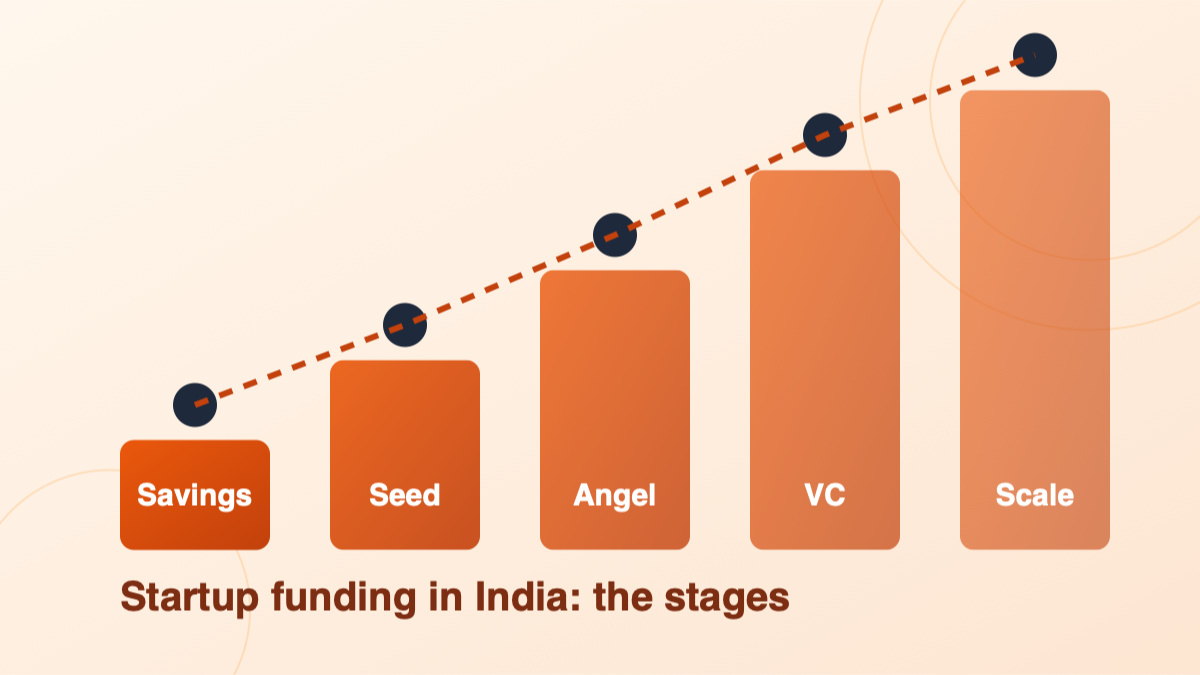
Startup funding in India usually moves through a few stages. Founders start with their own money and early revenue, sometimes add a government seed grant routed through an incubator, then raise from angel investors, and later from venture funds. Each step asks for more proof than the one before it. Most startups never need every stage, and many never raise venture capital at all. For a round-by-round overview with round names, see our guide to Indian startup funding stages; this article focuses instead on where each kind of money comes from and how to verify it.
Stage 1: Your own money and first revenue
Almost every company begins here. Founder savings, a small loan from family or the first paying customers cover early costs such as domain, hosting and a basic launch. The advantage is control: nobody else has a say in your roadmap. The limit is speed, because you can only spend what you have.
If this is where you are, our look at how Indian bootstrapped startups are built is the better starting point. Bootstrapping is a legitimate path, not a waiting room for a funding round.
Stage 2: Government seed support through incubators
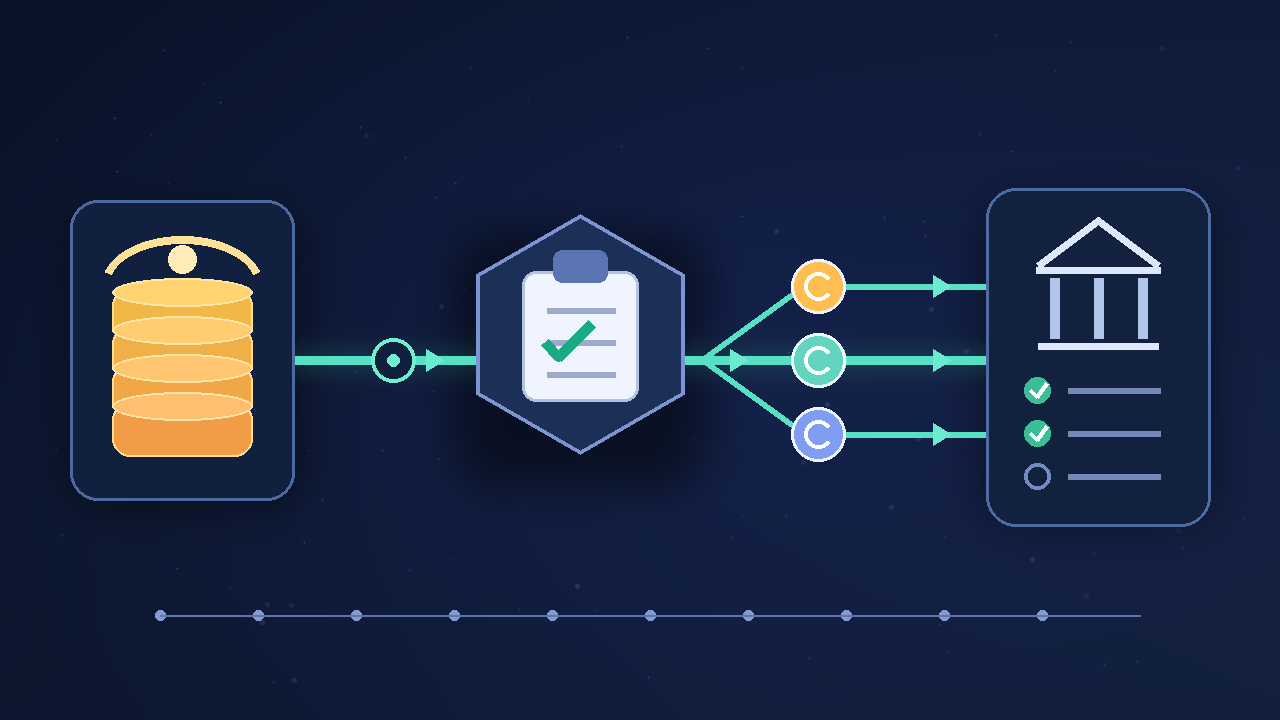
The Startup India Seed Fund Scheme (SISFS) is the clearest government route for very early companies. According to the scheme portal, it provides financial assistance for proof of concept, prototype development, product trials, market entry and commercialisation. The money does not come to you directly from Delhi: it is disbursed to selected startups through eligible incubators across India.
The eligibility basics from the portal:
- The startup must be recognised by DPIIT.
- It must have been incorporated not more than two years ago at the time of application.
- It needs a business idea for a product or service with market fit, viable commercialisation and scope to scale.
Under the scheme guidelines, an incubator can give up to Rs 20 lakh as a grant for validating a proof of concept, prototype development or product trials, released in milestone-based instalments. For market entry, commercialisation or scaling up, the guidelines allow up to Rs 50 lakh through convertible debentures, debt or debt-linked instruments. Note the difference: the first is a grant, the second is an investment you may have to repay or convert.
The portal's FAQ adds some practical details. You can apply to up to three incubators in order of preference, applications are reviewed by the incubator's seed management committee, and a selected startup must sign a legal agreement with the incubator before receiving funds. The FAQ says incubators evaluate applicants and select startups within 45 days of receiving the application.
Two cautions. First, an incubator approving you is not the same as money reaching your account; we looked at that gap in Startup India Seed Fund: approved vs disbursed. Second, DPIIT recognition and a Udyam registration are different certificates that prove different things, covered in Udyam vs DPIIT recognition.
Stage 3: Angel investors and angel funds
Angels are individuals or groups who invest their own money in very early companies, usually before a business has predictable revenue. In India they often invest through structured vehicles. SEBI's FAQ describes an angel fund as a sub-category of Venture Capital Fund under Category I Alternative Investment Funds, which raises money from angel investors and invests under a dedicated chapter of the AIF Regulations.
What this means for a founder:
- Expect questions about the team, the problem, early traction and how you will use the money, more than about spreadsheets.
- Expect paperwork: a term sheet, a shareholders' agreement and company filings. Get a lawyer or experienced advisor to read them.
- Ask what the investor does beyond writing the cheque. Introductions to customers and later investors are worth more than a slightly higher valuation.
Stage 4: Venture capital funds and the Fund of Funds
Venture funds in India are generally structured as SEBI-registered Alternative Investment Funds. They pool money from institutions and wealthy individuals and invest in companies they believe can grow very large. That is a narrow filter: if your business is a good, steady company that will not grow explosively, venture capital is probably the wrong tool, and that is fine.
The government also invests indirectly. SIDBI's Fund of Funds operations contribute to the corpus of SEBI-registered venture funds and Alternative Investment Funds, which in turn invest in startups. As a founder you do not apply to the Fund of Funds. You pitch the venture fund, and the fund's own mandate decides whether it invests.
Stage 5: Debt, revenue-based and customer-funded growth
Not everything is equity. Some founders use venture debt, working-capital loans, invoice financing or customer prepayments. These keep ownership with you but come with repayment obligations. If you sell to businesses and your revenue is predictable, a prepaid annual plan can fund more growth than a small angel round. Whichever you use, collect money in a way that is easy to reconcile: our guide on how a payment gateway works in India explains settlement timing, refunds and the RBI-regulated pieces behind a checkout.
A simple checklist before you take any money
- Know the instrument. Is it a grant, equity, a convertible note or debt? Each has different consequences if the business changes direction.
- Check who is actually offering. For funds, look for the SEBI registration; for schemes, use the official portal rather than a consultant's summary.
- Read what you give up. Board seats, veto rights, information duties and exit clauses matter as much as valuation.
- Plan the use of funds. Write down what the money will buy in the next 12 to 18 months and what evidence it should produce.
- Keep records clean. Recognition certificates, incorporation papers, cap table and bank statements will be asked for in nearly every process.
- Never pay for a guaranteed grant or investment. Official schemes do not charge success fees through middlemen. If someone promises guaranteed funding for a fee, walk away.
Where visibility fits in
Investors, incubators and early customers all look you up before they reply. A clear public profile, a working product page and a launch story help every stage above. A free listing in a startup directory is a cheap way to be findable; our startup directory submission checklist for Indian founders shows what to prepare, and you can browse the SuperLaunch startup directory to see how other Indian startups present themselves.
FAQ
What is the first funding step for an Indian startup? Usually your own money and early revenue. Government seed support and angel funding come after you have a working idea or early users.
Can any startup apply for the Startup India Seed Fund Scheme? No. The portal says the startup must be DPIIT-recognised and incorporated not more than two years before applying, among other criteria.
Does the Fund of Funds invest directly in my startup? Per SIDBI, its Fund of Funds contributes to SEBI-registered venture funds and AIFs. Those funds make the startup investments.
Is raising venture capital necessary? No. Plenty of Indian companies grow on revenue and small amounts of outside money. Choose the source that fits your growth path.
Final word
Funding is a tool, not a milestone. Match the source to your stage, read the terms, verify who is offering the money and keep the evidence trail tidy. Revisit the official scheme pages before you apply, because eligibility and limits can change.EOF